Australia, the world’s driest inhabited continent, faces significant challenges related to water scarcity due to climate change and a growing population. To meet these challenges, the country has turned to water desalination of brackish bore water as an alternative to traditional water sources.
What is water desalination?
Water desalination is a vital process that involves the removal of salt and other impurities from saline water, primarily brackish water, in order to render it safe and suitable for human consumption, agricultural activities, industrial applications, and other essential uses. In arid and water-stressed regions around the globe, desalination technology has emerged as an increasingly crucial solution to address the growing demands for freshwater resources.
Desalination plays a critical role in ensuring water security, particularly in areas where conventional water sources, such as rivers, lakes, and groundwater, are insufficient or threatened by factors like climate change, over-extraction, and pollution. As the world’s population continues to expand and freshwater resources become scarcer, the need for alternative water supply methods has become more pressing, leading to a surge in interest and investment in desalination technologies.
The primary objective of desalination is to transform saline water into potable water by eliminating dissolved salts, minerals, and other impurities. This process not only provides a source of drinking water for millions of people but also supports industries, agriculture, and ecosystems that rely on clean water to thrive. In many coastal communities, desalination has become a lifeline, helping to alleviate the pressure on existing water resources and ensuring that the growing water demands are met.
Desalination technology has advanced significantly over the years, with ongoing research and development aimed at enhancing the efficiency and cost-effectiveness of the process. Modern desalination techniques have improved in terms of energy consumption, water recovery rates, and environmental impact, making them more attractive and viable options for a diverse range of applications.
Our products are commonly used in communities or remote areas for daily drinking water access, boat water desalination, food and beverage processing plants, oil and gas industry, boiler water supply, agricultural irrigation, emergency response services, etc. Below are our different models of desalination equipment.

1.5 TPD Seawater Desalination Machine
- Fresh Water Output: 1.5 tons per day
- System recovery rate: 12%
- Power Consumption:1.5KW
- Voltage: single-phase 220V/50HZ ,three-phase 380V/50HZ, three-phase 440V/50HZ(Customized)
- Working pressure: 35~55MPA
- Operating temperature: 5~45C
- Inlet water TDS: less than 40000PPM
- Desalination rate:99.2%
- TDS: less than 700PPM
- Inlet PH value: 3~10
- Size: 800mm*500mm*500mm
- Net weight: 100KG
- Packing net weight:120KG
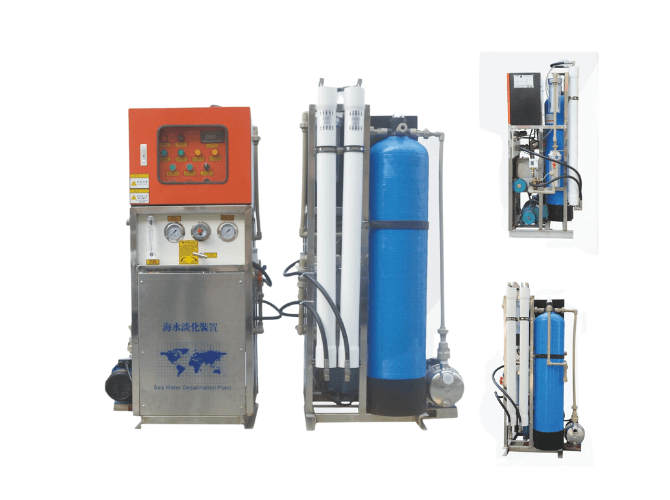
3TPD Sea Water Desalination Equipment
- Main features: small size, easy installation, convenient operation, and maintenance.
- Fresh Water Output: 3 tons per day
- Size: L*B*H=500mm*570mm*1350mm
- Weight: ≈150kg (dry weight)
- Power Consumption: 1.5kw
- System recovery rate: ≈15%(depending on temperature and water quality)
- Power supply: AC380V /50Hz/Customizable
- Electric control protection grade: IP56
- Product color: primary color
- Material composition: SUS316 stainless steel
- Effluent water quality: in accordance with GB5749-2006drinking water quality standard
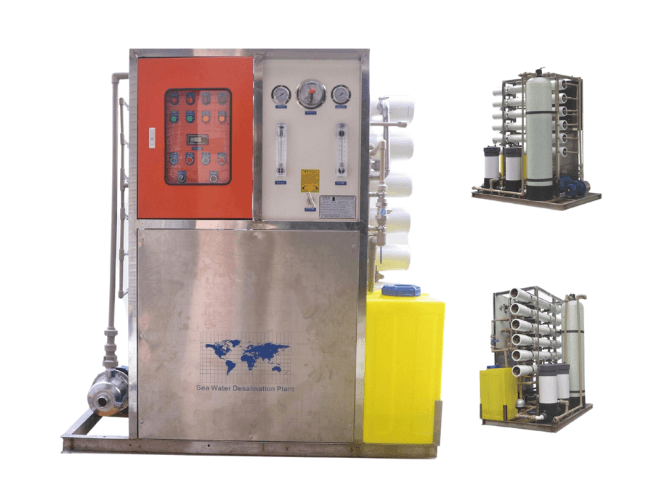
5TPD Seawater Desalination Machine
- Main features: compact structure, generous;
- Easy to operate and maintain.
- Fresh Water Output: 5 tons per day
- Size: L*B*H=910mm*500mm*1540mm
- Weight: *260Kg (dry weight)
- Power Consumption: 22 KW
- System recovery rate: 20%(depending on temperature and water quality)
- Power supply:AC380V /50 Hz/Customizable
- Quality standard: comply with ship CCS inspection and provide the corresponding certificate
- Effluent quality: meet GB5749-2006 drinking water quality standards
Electric protection grade: IP56 - Main components: high-pressure pump imported from Italy original 316L stainless steel material;
- The reverse osmosis membrane is made by the Dow brand.
- Effectively ensure the core quality of products.
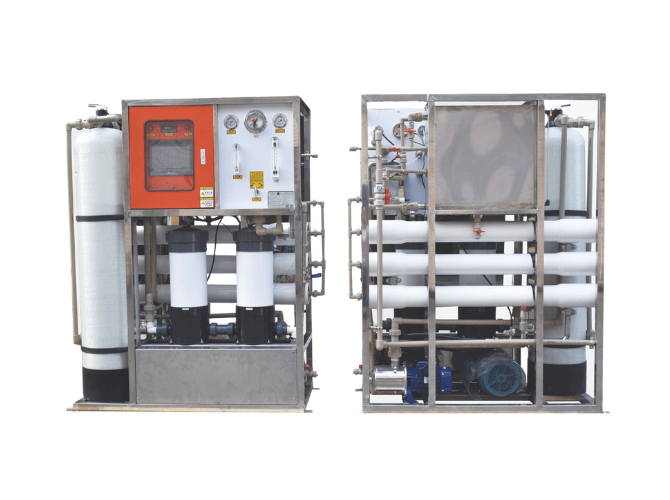
10 TPD Desalination Machine
- Fresh Water Output: 10 tons per day
- Size: L*B*H=1520mm*800mm*1920mm
- Weight: ≈800Kg (dry weight)
- Power Consumption: 5.5 KWSystem recovery rate: 33%(depending on temperature and water quality)
- Power supply: AC380V /50 Hz/Customizable
- Effluent water quality: in accordance with GB5749-2006standard for drinking water quality
- Electric protection class: IP56
- Main components: high-pressure pump is imported from Italy AR brand,316L material
- The reverse osmosis membrane is made by Dow
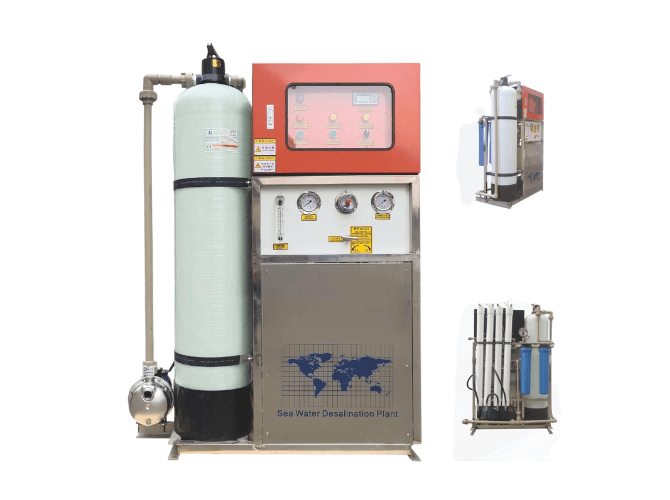
25TPD Sea Water Desalination System
- Fresh Water Output: 25 tons per day
- System recovery rate: 25%
- Power Consumption: 5.5KW
- Voltage: 440 V /60 HZ
- Working pressure: 3.5~5.5MPA
- Operating temperature:5~45℃
- Inlet TDS: less than 40000PPM
- Desalination rate: 99.2%
- TDS: less than 700PP
- MPH value of inlet water: 3~10
- Size: 1700mm*1120mm*1900mm
- Packing specification(wooden case): 1900*1320*2100mm
- Net weight of equipment: 800KG
- Packing net weight: 880KG
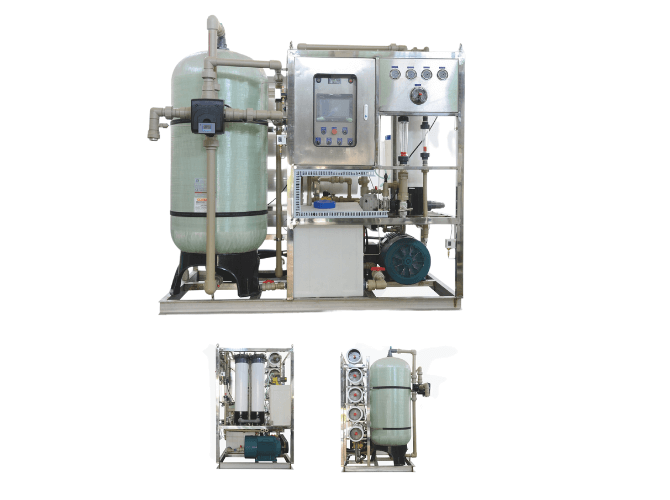
60 TPD Desalination Plant
- Fresh Water Output: 60 tons per day
- Size: L* B*H = 2250mm*1250mm*2040mm
- Weight: * 2500kg (dry weight)
- Power Consumption:18.5kw
- System recovery rate: 33%(depending on temperature and water quality)
Power supply: AC380V / 50Hz, AC 440v /60Hz,AC480v /60Hz(Customized) - Effluent water quality: in line with GB5749-2006 drinking water quality standard
- Electric control protection grade: IP56
- Main components: the high-pressure pump is made of sepck brand imported from Germany; the reverse osmosis membrane is made of American ceramic Brand.


 aquapurehitech-australia.com -